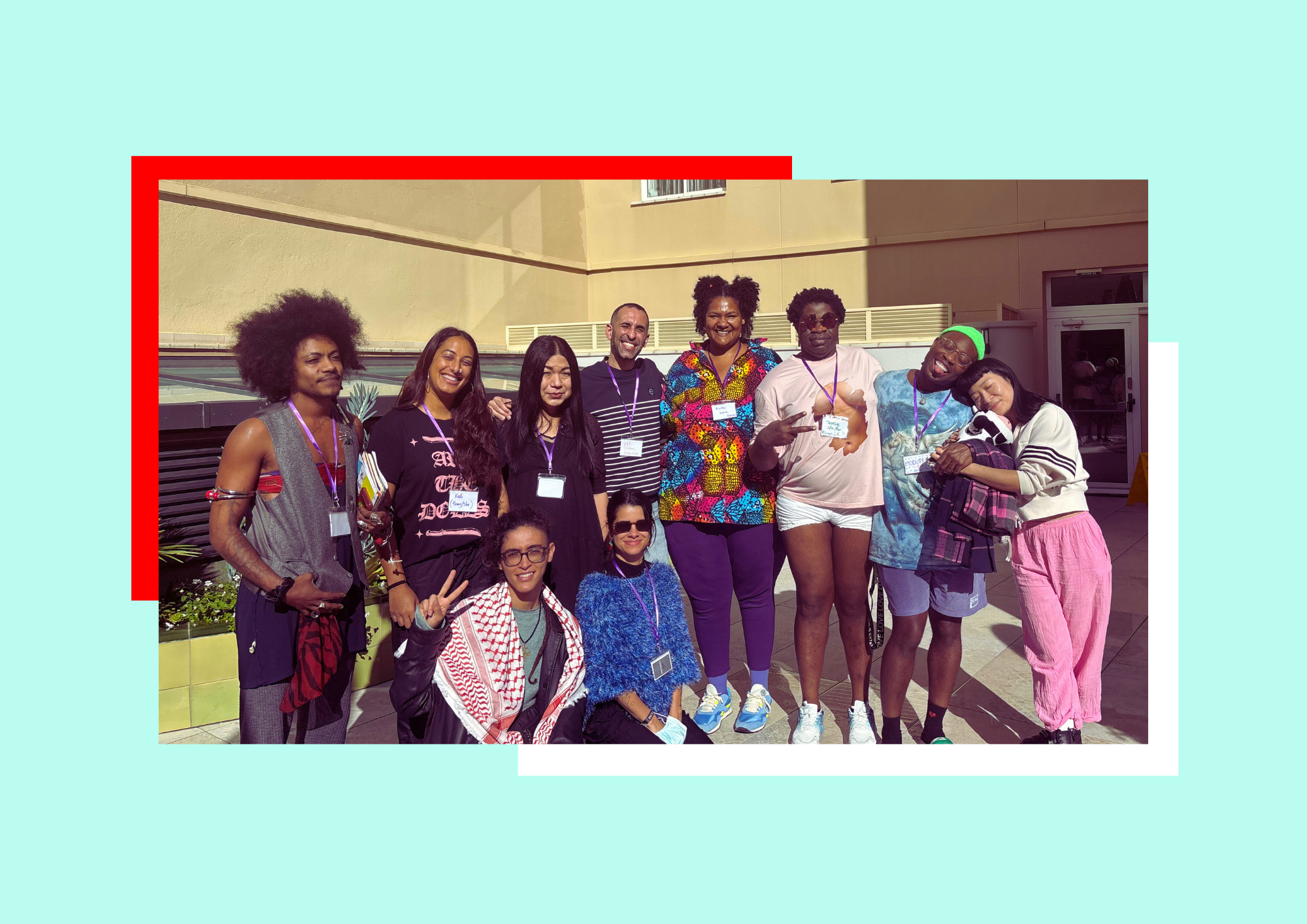
From 4 - 7 November 2025, 30 racialised activists (27 sex workers and 3 allies) convened in Barcelona, Catalunya (Spain) for ESWA’s 2nd BIPOC Academy. Our first BIPOC Academy in 2022 focused on building activist competencies in the racialised sex work community and empowering marginalised community members. This year’s topic? Digital rights and racial justice.
“I feel like digital rights is something I don’t know very well, and it’s so full of jargon… I knew the best way to learn about it would be from racialised sex workers and I can now pass this information on to my communities and my friends.” – Mina (participant, United Kingdom)
All of us were involved in activism of some kind – sex workers’ rights, racial justice, migrants’ advocacy, or other forms of community work. The majority of us arrived exhausted; burnt out from our work and the state of the world. We came with hopes to gain connection, community, knowledge, and a smidge of rest in the eye of what feels like a relentless rising storm of global fascism. A world of increasing digitalisation and new tactics used to harm sex workers is no easy burden to bear! For many of us, the generous funding provided by the European Artificial Intelligence & Society Fund, and Luminate was the only way we were able to travel outside of our countries of residence in Europe to attend a conference like this without having to worry over a loss of income from our sex work.
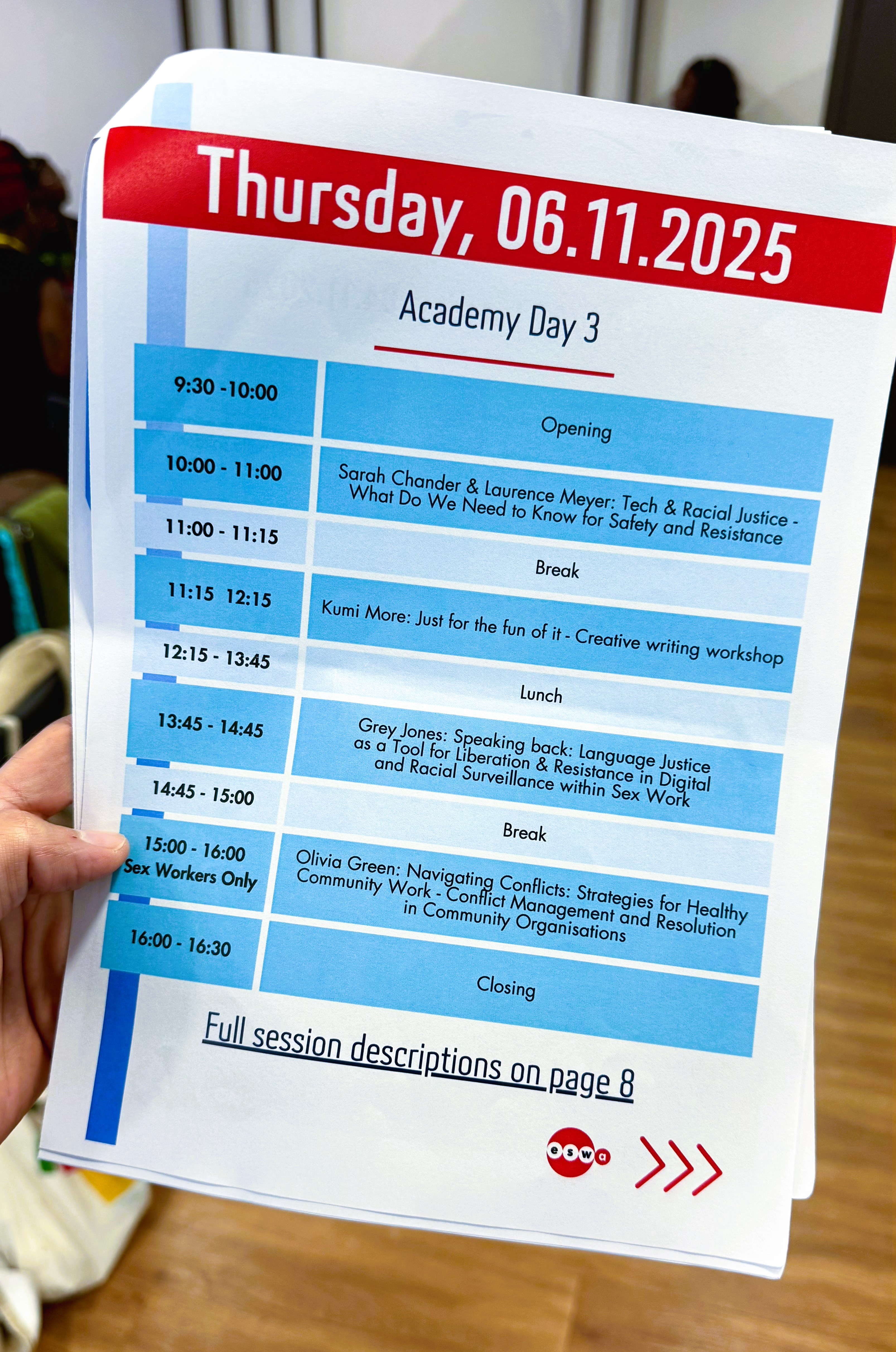
Over the course of three days, 12 sessions were delivered by sex workers and allies on topics at the intersection of racial justice and digital rights where we listened, learned, and shared extensively.It wasn’t always easy – some of the information we learned about the weaponisation of technology against racialised people, the pervasiveness of surveillance on our communities, and methods and the extent of data harvesting in today’s world left us feeling genuinely terrified and momentarily without hope (some of us spoke, half-jokingly, of wanting to delete all our social media after the conference).
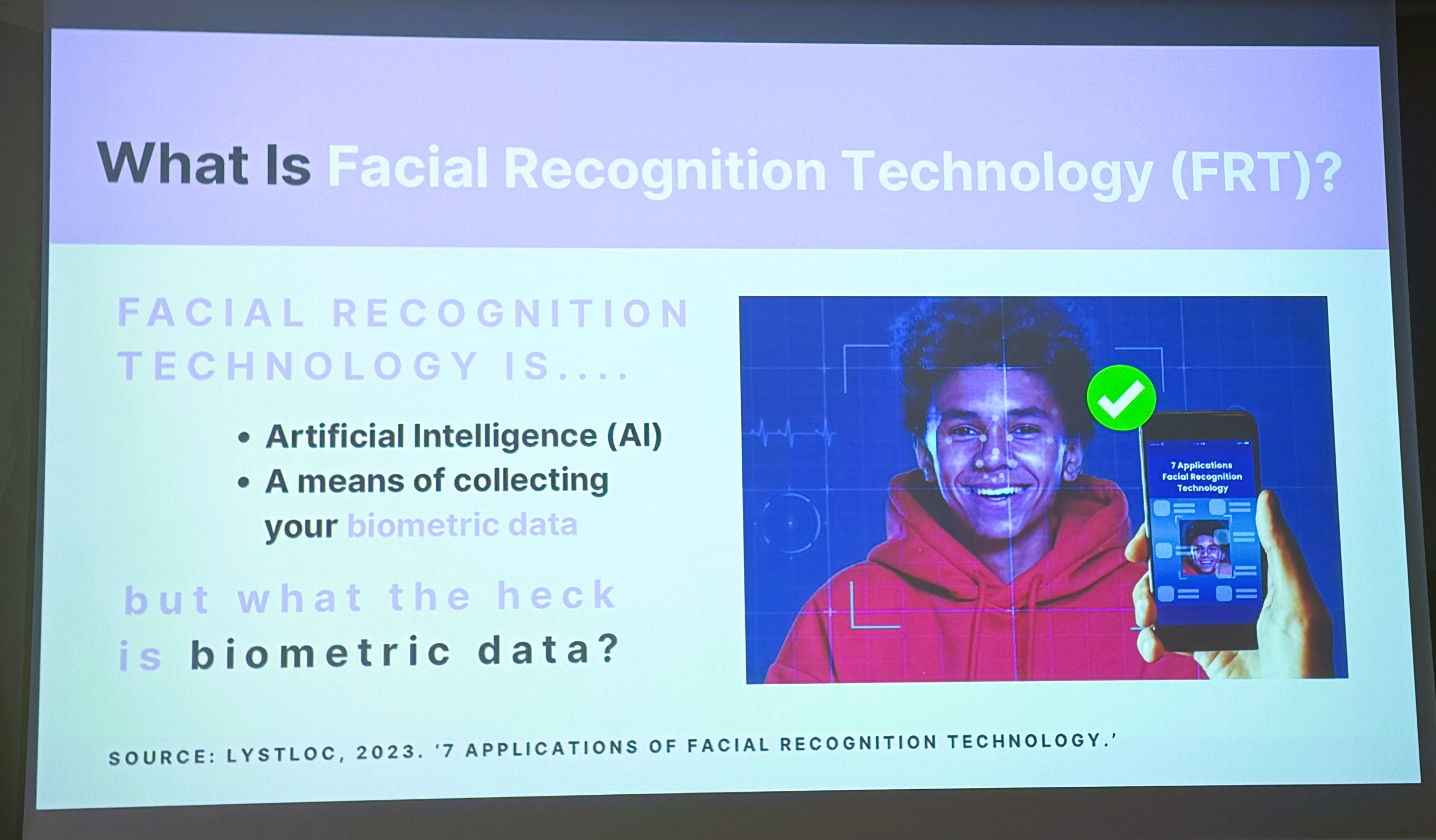
Slide from the session 'Face Card: Understanding the Impact of Facial Recognition Technology (FRT) on Your Sex Work' by Mirage Allen.
Sex workers were given the opportunity to be treated as experts on digitalisation: session holders spoke about the impacts of border controls and deportation on racialised sex workers; Facial Recognition Technology (FRT)’s proven inherent racial bias and the ways it is mobilised by law enforcement to track sex workers; digital violence against street-based sex workers in Spain and Latin America; the Digital Services Act (DSA) and the AI Act; restorative justice and forms of redress; communications strategies, and ways we can practice care for one another as sex workers, as well as ourselves.
“Community” was a topic which arose again and again, throughout sessions: What mistakes have we made before in trying to build community? What tools do we require to build the future free of oppression we all dream of? In what ways can we learn from each other and other movements to establish stronger and more resilient communities? How can we transcend our differences, avoid replicating systemic injustice, and concentrate our energies on realising our shared goals? We did not come up with all the answers, but we generally arrived at the same conclusion: We are all we have, and we have to be able to rely on and trust one another. We may, in the memorable words of two attendees, feel as though we keep trying and failing to build community, but we would much rather be here with one another trying to make something which has never been done before than not trying at all. We recognised how we have to consistently be on guard against our internalised Eurocentric hierarchies of colorism, ableism, colonial languages, privileged passports, and other forms of coloniality ingrained among BIPOC communities which were invented to divide us; this is work we must do in spaces made exclusively and specifically for BIPOC to avoid being distracted by white fragility and white discomfort around difficult topics and to avoid dispensing our valuable time and energy on explaining the most basic concepts of anti-racism and intersectionality. One participant reflected that they never felt truly able to relax around white sex worker activists – that even being able to just take their shoes off during the sessions to feel more comfortable was something they would never do around white sex worker activists out of the fear of being judged or racially characterised in a negative way. The feelings of isolation many of us feel in our work, either because of being sex workers living around civilians or being BIPOC sex workers working around white sex workers, were temporarily alleviated in the vibrant multicultural hub of Barcelona. Some of us made new friends, and found fresh opportunities to collaborate in our activism.
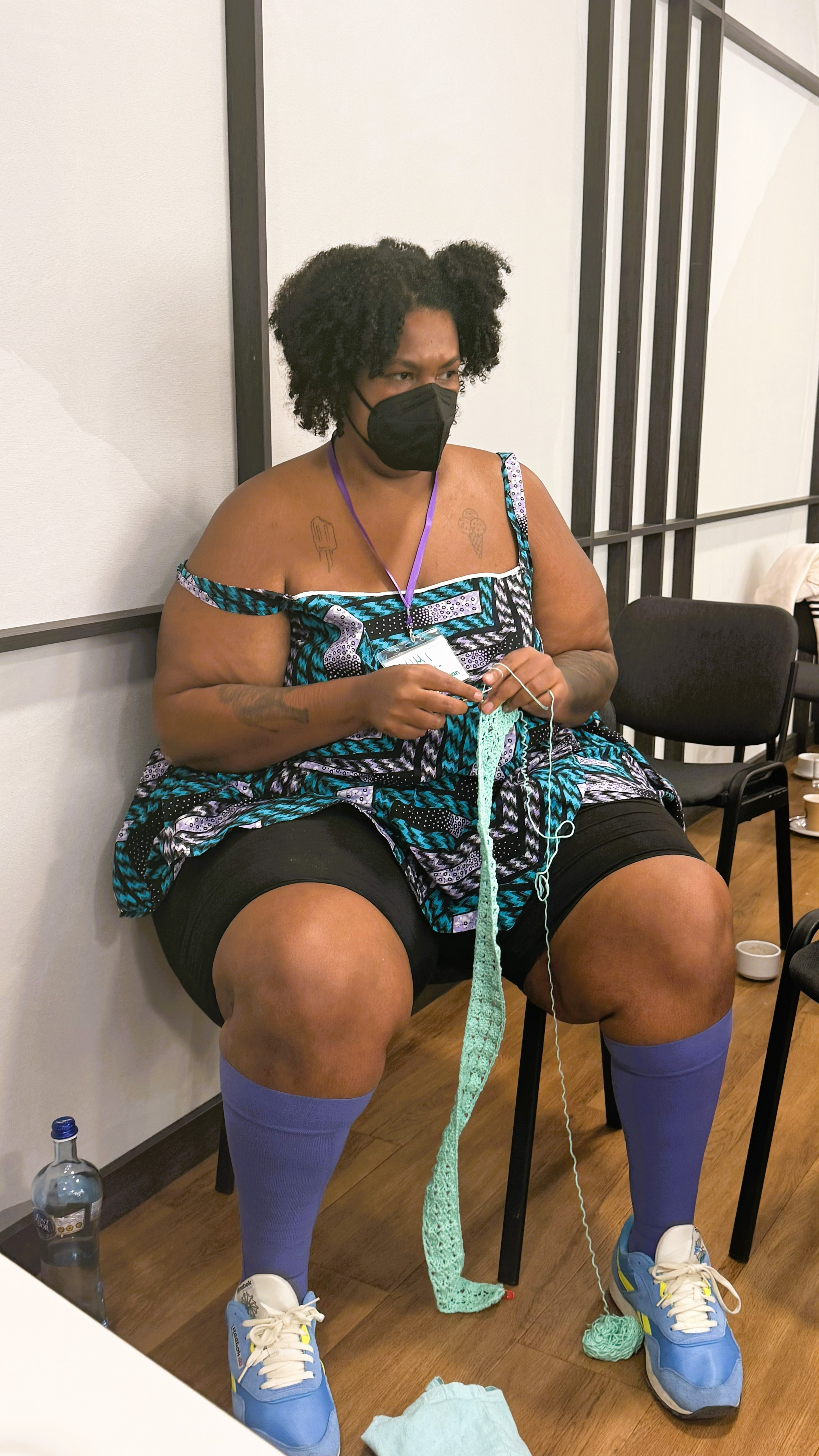
In our free time, we took advantage of the sunny days – apart from one thunderstorm – to absorb the facts and the fear as best we could during quiet moments of tranquility amidst the greenery in the hotel courtyard. Some of us celebrated the rising full moon mid-week down at the beach, taking photos of one another for work or just for fun, and letting the healing power of the ocean brush against our sandy feet. We made space for grief – many of us had lost colleagues, recently or over decades in the industry. Tears were shed and frustration was expressed. During a creative writing workshop, attendees tapped into the power of poetry and prose to express our feelings through the lens of our own native languages, our upbringings, our belief systems, and ways in which we’ve felt hurt or betrayed by the outside world and our own communities. We realised that we needed to do more – much more – to ensure that street-based sex workers are fairly represented in the mainstream sex worker rights movement and at conferences like this one. Accessibility was a daily priority, with two designated care persons assigned to be present for people experiencing difficulties and a translator present for those who didn’t speak English.
Ultimately, we left with a collective understanding that the world is changing faster than we could have ever imagined. We know that we, as sex workers, are at the forefront of being able to anticipate the constant amendments to digital freedoms worldwide and that we will more than likely be the first ones to have our digital rights attacked with every new technological ‘advancement.’ We know that our protests against surveillance, attacks on privacy, and other digital rights violations will eventually become mainstream protests – the insights we shared at the 2nd BIPOC Academy serve not only the sex worker community, but anyone who goes online in today’s world. We are grateful to every session holder who brought their expertise, every participant who came ready and willing to learn, the organisers at ESWA who worked tirelessly to bring this event to life, to our funders for making this event possible and accessible to all sex workers regardless of income level, and to sex workers worldwide who are fighting for the protection of digital rights for every human being – living up to our moniker of being ‘canaries in the coal mine.’
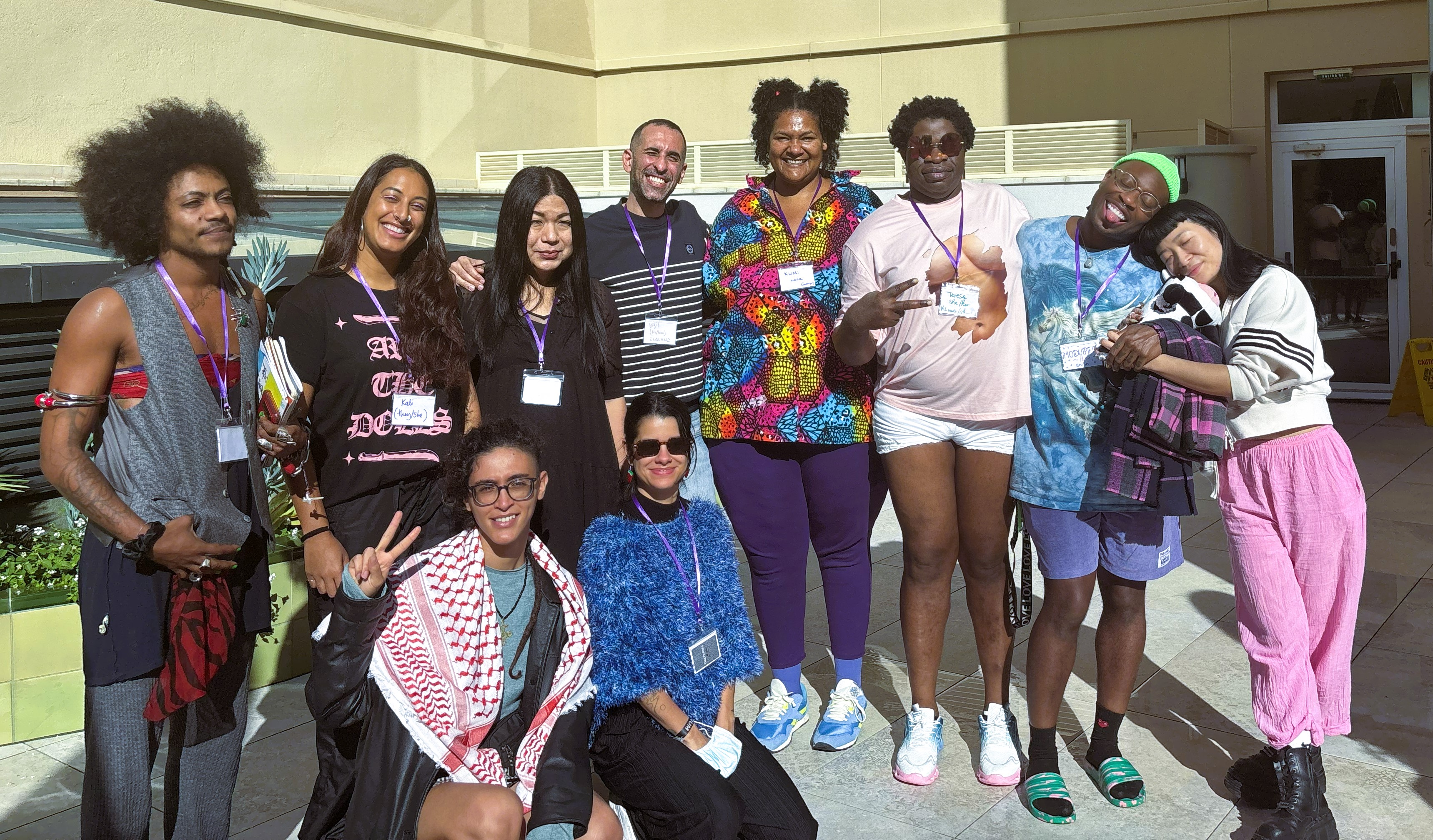
We hope you enjoyed this recap of ESWA's BIPOC Academy! We are still working our way through all the photos and videos taken during the event, including powerful video testimonial which we will publish soon.
Stay tuned on our newsletter and social media! Thank you for your support for sex workers' rights.