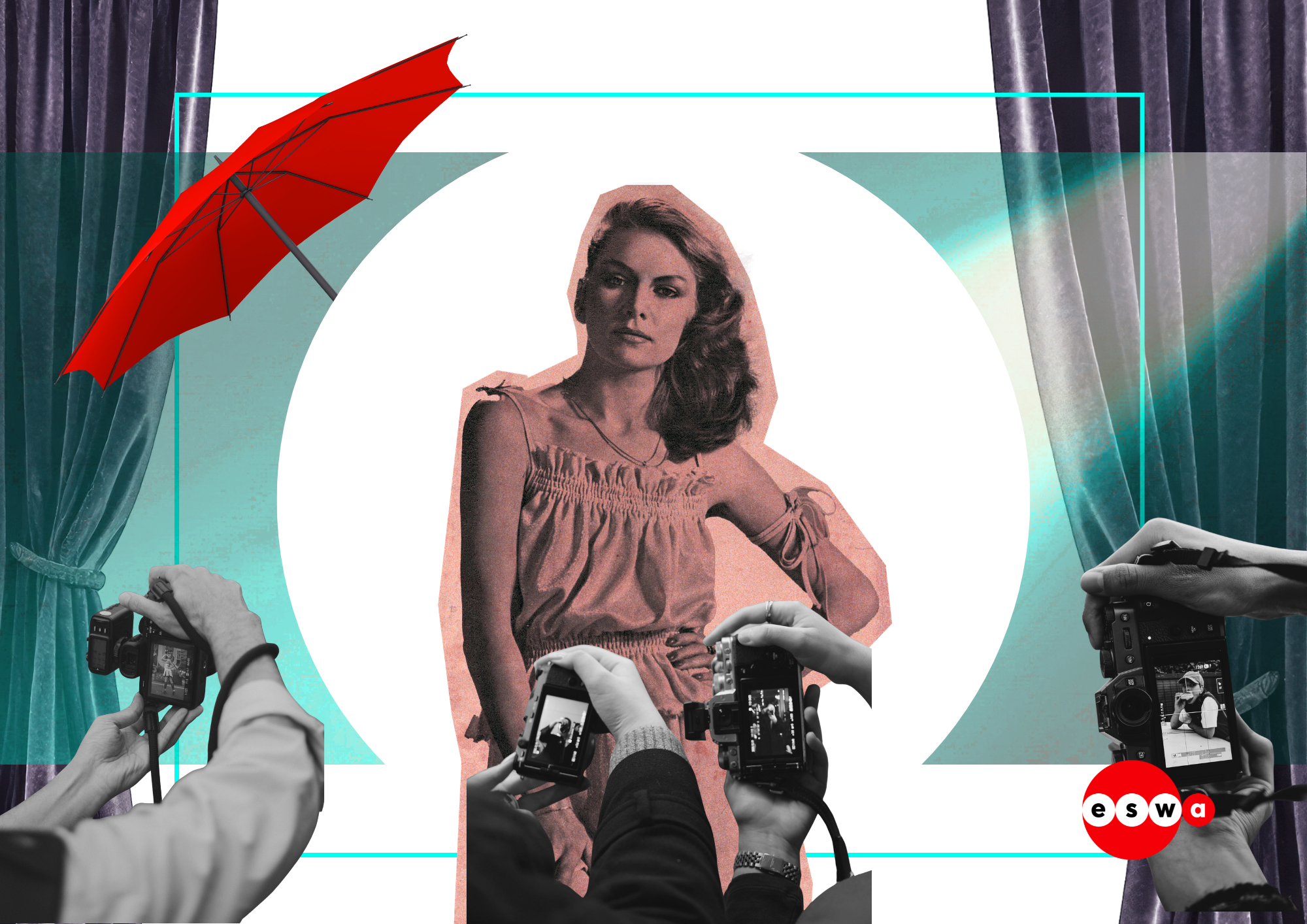
The body is a centralised object within both the fashion and sex industries.
In the fashion industry, the body image as a source of inspiration is used for creative production, whilst sex workers use their bodies as a means to earn a living. Fashion and sex work are two powerful forces that exist in tandem, requiring human input at many levels, driven by a hunger to consume, overproduce, manufacture, and control. But the two are powerful engines that provide mystery, allure, and escapism in a world that craves imagination. Why are sex workers stigmatised for the work that they do when the fashion industry shares many similarities?We all wear clothes, but do we question who makes them and what conditions workers work in when producing and manufacturing our clothing? Luxury fashion group LVMH, which is at the higher end of the fashion system, has been put under scrutiny in recent years for the exploitation of migrant workers who reportedly earned 5 euros per hour working 90-hour weeks. The consumer thinks they are purchasing a luxury item; however, the consumer is buying an item that has been prized with the “Made in Italy” label but is produced at “Made in China” prices. Meanwhile sex work can offer autonomy over working hours and higher hourly rates. Why is there stigma surrounding a sex worker whose need is to escape from oppressive family arrangements, patriarchal relations, and trans- or homophobia? These are among the main motivations to migrate to and across Europe in order to find work in the sex industry. In the fashion industry, unpaid work in the from of design, photography or studio internships can be seen as a right of entry, creating hierarchical class systems and financial privileges, and in sex work, one of the main goals is to improve one’s economic situation.
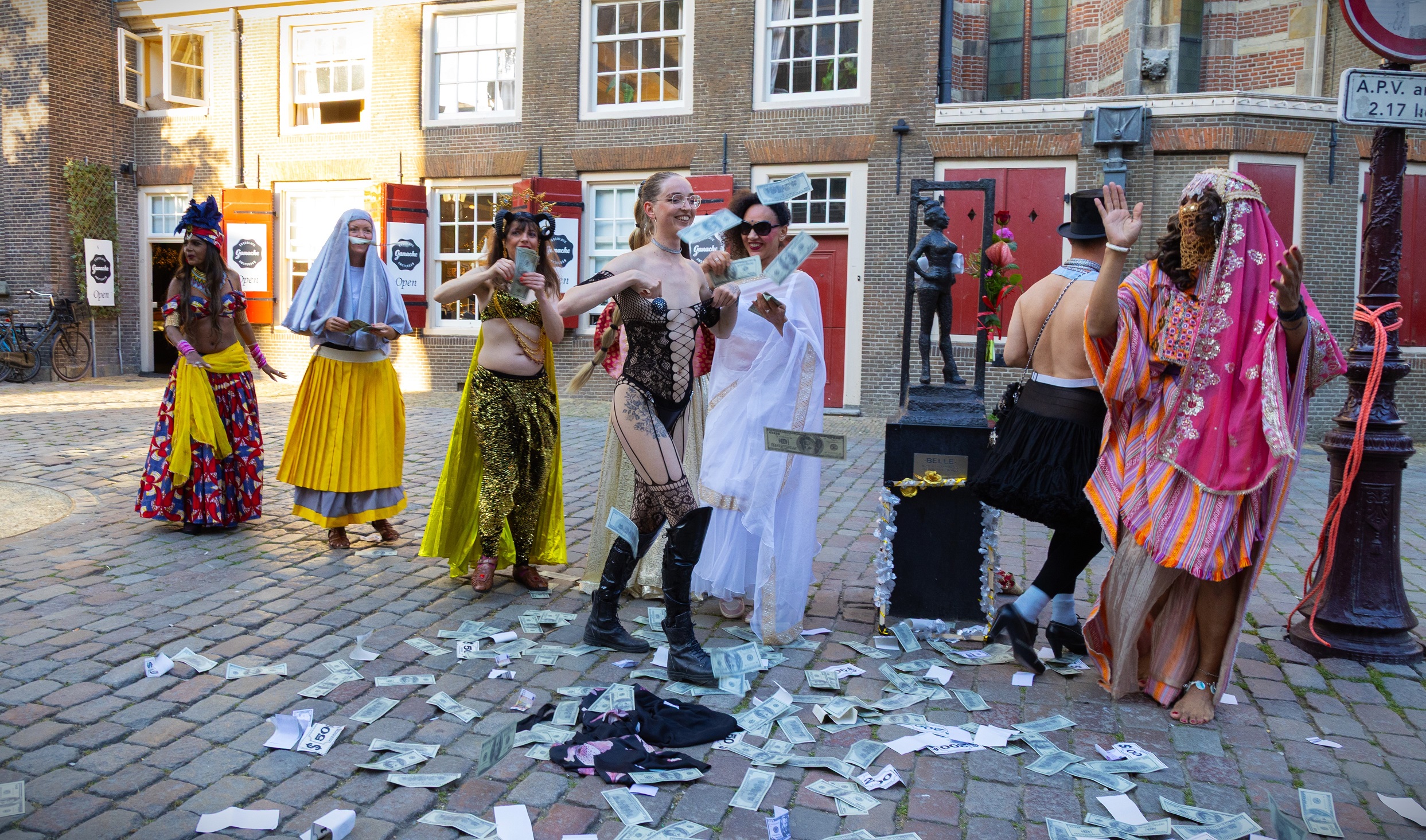
Sex work and fashion have always been connected. ESWA member PIC Amsterdam celebrated 50 years of International Sex Workers' Day (June 2nd 2025) with a public performance showcasing sex workers' fashion across different eras and cultures.
The persona - Visibility and concealment: A protective or aesthetic measure?
Clothing can be seen as a second skin and used as an external layer of protection, a chance to create a persona, to conceal and reveal identities. At the Met Gala in 2021, Kim Kardashian stepped out in an all-in-one gimp suit, designed by Demna Gvasalia, who was creative director at Balenciaga at the time. This can be seen as an attempt to conceal Kim Kardashian’s identity. The gimp suit has BDSM connotations, and its function is to conceal the wearer's identity. Fashion is all about identity, and similarly, some sex workers choose to keep their identities hidden. This introduces a fascinating tension between visibility and concealment, authenticity and mystery. Kim's body is so recognisable, and this concealment of identity by a skin-tight gimp suit is supposed to conceal her identity, but in fact, it does the opposite; it creates a sense of controversy, media attention, and an endless collection of memes driven by social media and technological algorithms, and it takes on a new meaning. This also raises questions about whether we control our image or if we are increasingly shaped by unseen algorithmic processes. This play on concealment for sex workers serves not only as an aesthetic function, but also as a tool to protect the sex worker's anonymity. We live in a digital world where government policies, facial recognition, and censorship all perpetuate anxiety amongst the sex worker community. This is why some sex workers choose to keep their identity hidden. The creation of the persona in sex work is central to everything a sex worker does, as creating a version of yourself that is separate from who you are can be seen as a survival mechanism, and this persona can protect your personal life whilst it engages with the consumer in the digital space. This anonymity adds a layer of complexity to how sex workers document and represent each person visually. There is a tension between the real and the constructed self that explores how technology shapes our understanding of identity.
In simple terms Demna Gvasalia’s gimp suit design creation that was meant to conceal Kim Kardasians identity, could be seen as an aestethic measure to create shock value. For the sex workers, this concealment of identity is a measure to protect identities and maintain anonymity - protecting oneself from discrimination and violence - while also offering room for creative expression and developing a brand. The fashion industry is built on the creation of fantasy and deception for the consumer, who signs up to buying and purchasing the dream. Yet, the same purchase of a fantasy faces much harsher critisism within the sex industry.
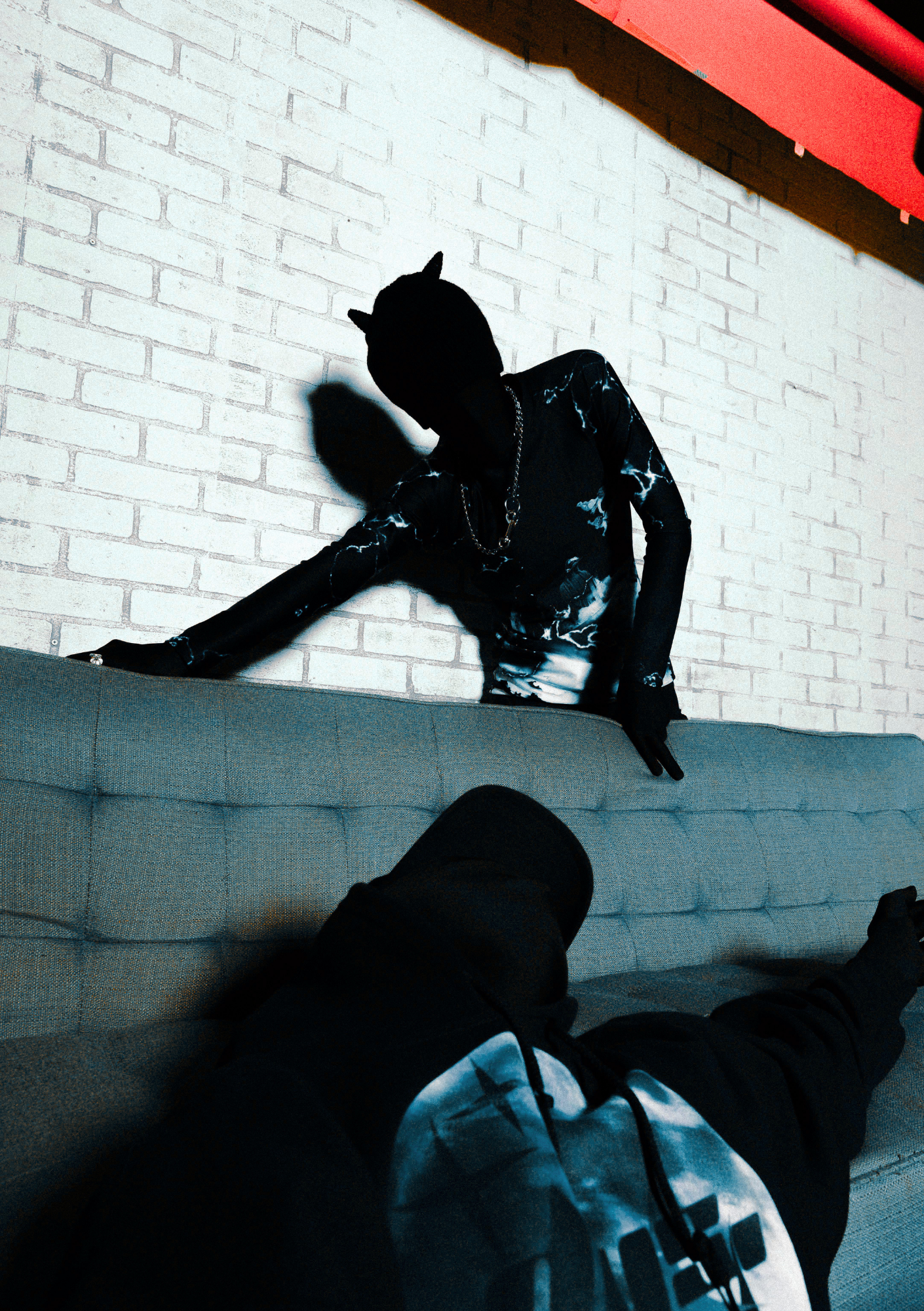
Face-concealing latex suits are common in sex work and BDSM culture.
Platformisation: Manufactured uncertainty
The hype around the Platformisation of sex work through streaming platforms such as OnlyFans, Fansly, and Many Vids has become a hot topic. In recent years, the development platforms have become marketplaces where consumers, sellers, and service providers are brought together into one single “hub”. The introduction of platformisation within the fashion and sex industries, which share the same digital ecosystems, has shaped visibility, income, and hierarchies across both industries. Hierarchies have become more definitive in a way that, on the higher end of the scale, Creators with greater start-up capital—including a combination of economic capital, social capital, and cultural capital—will achieve greater success on the platform” The fashion brands, influencers and models who already have a large following have the competitive edge when it comes to gaining traction and influence on these platforms. On the other end of the scale, sex workers who operate in the digital space are increasingly becoming more insecure due to fear of being shadowbanned as a result of platform censorship. “Manufactured uncertainty is created by the secrecy and apparent arbitrariness of these ranking algorithms combined with the fact that they are barely altered without notice or explanation creating highly volatile and precarious working conditions for content creators and models who depend on their visibility and searchability on these platforms.”It is not entirely accurate to say that stigma towards sex workers has become eroded as a result of platformisation. It has created a more competitive and insecure landscape. Strict community guidelines on these platforms, along with financial discrimination from banks, have become more widespread, resulting in sex workers' bank accounts being shut down.

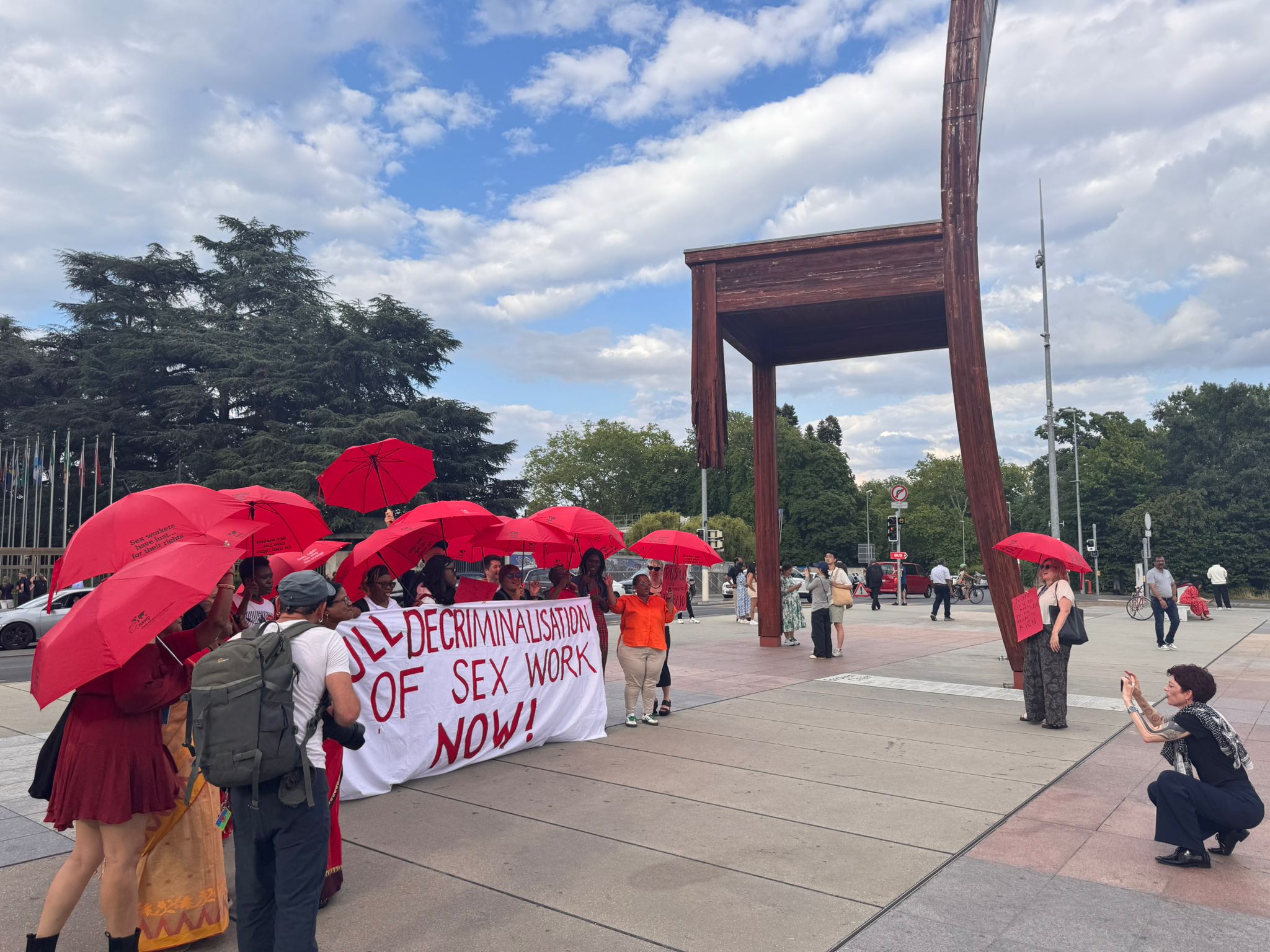
ESWA works extensively with the topics of deplatformisation, censorship, and access to digital spaces for sex workers.
Click the image above to see our report on platform accountability, or visit the resources section for more.
Cut, Copy, Paste : Hierarchical exchange and creative cross-pollination.
Historically, sex workers have been documented for creative purposes, through various media that include painting, photography, and art. French-Hungarian photographer Brassaii, who documented the 1930s Paris underworld of brothel workers. “Chez Suzy” was the workers' place of work, and Brassaii's voyeuristic eye captured sex workers, resulting in mystical and captivating imagery. We cannot include the images here for copyright reasons, but we encourage the readers to look them up.
This can be viewed as an exploitive art form, taking from sex workers' lives without understanding the stigma faced by sex workers and the true meaning beyond the visual and captivating facade. Fashion designer John Galliano most notably has taken influence from Brassai’s Nocturne photography for his 2024 Artisanal collection. Galliano reimagined the act of walking through how Brassai walked through 1930’s Paris, capturing his subject matter in their place of work in a non-judgmental way. He walked through Paris to try to understand and get a sense of the characters whom Brassaii documented realities at the time, but does re tracing those physical spaces and walking through the streets of Paris create a dialogue with the subject matter he has taken direct influence from. Design integrity can be a tricky balance to strike, and fashion's cut, copy, and paste mentality that borrows from sex workers' lives and aesthetics without understanding the stigma that sex workers face or without any input from sex workers who wear the clothing can be seen as disingenuous.
Sex work is more than an aesthetic or business transaction; it’s deeply emotional and typically comes with physical and psychological tolls. The Female sex workers documented in Brassaii’s photography who worked in “Chez Suzy,” a brothel located in the Paris district of Quartier Saint-Germain-Des-Près occupied a marginalised position within a broader social hierarchy. Their image and environment have been used for design inspiration for the 2024 Margiela artisanal collection shown in Paris. The clothing evoked layers of the past and mystery, sold at a high price to the consumer who, at the higher end of the hierarchical system, can afford to purchase the clothing at an elevated price. This process reveals a clear imbalance. There is a hierarchical exchange that documents the sex worker in their place of work has become distorted and elevated into a place of luxury. In this process of creative cross-pollination that moves upwards through class systems without redistributing value, recognition, or agency back to those whose lives inspired it.
Dreams in Utopia - How can sex workers become become equal partners in the design process, which can lead to the destigmatisation of sex workers?
Sex workers have many skills - We know how to market, build brands, and position ourselves in an ever-increasing competitive landscape. Other industries, such as the fashion industry, can learn from the skills that we work so hard to build. Designers, Artists, and Photographers will continue to borrow from Sex work aesthetics. How can sex workers become more included within the design process that showcases authentic dialogues? The Decriminalisation of Sex work across the world will create more stable working conditions for sex workers and, as a result, may give more visibility and respect to what we do for work. This will give way to more respectful dialogues between the designer, artist, and the sex worker. The abandoning of shadowbanning and deplatformisation on social media platforms, which result in uncertainty and financial insecurity amongst the sex worker community, will break down cultural hierarchies.The integration of sex workers into the creative process, society and the inclusion of sex workers in formation of government policy when it comes to sex workers rights will showcase our skills, creativity and life experiences will benefit everyone and indeed all other industries.
Written by Andrew Culloo, Artist and Designer
Would you like to write for ESWA Blog? Contact Wszebor, ESWA Director of Communications and Campaigns at [email protected] with a brief outline of your idea.
We hope you enjeyed this blog post! Please consider sharing it further to bring more visibility to sex workers' rights.